AI and Switzerland: The Exponential Won't Wait
Zurich, May 2026 – ETH
Our Scenarios Program convenes economists, AI researchers, policymakers and civil society leaders to explore the implications of transformative AI, and to identify the policy responses each future demands. The workshops are complemented by the Policy Atlas—a continuously updated guide to policy options.
We believe that countries should develop Economic Preparedness Plans. Our workshops and the Atlas are designed to provide the foundation for doing so.

There are two ways of reacting to an exponential—too early, or too late. For Switzerland, the decision point is here. As a small, open economy built on precision industries, financial services, and institutional self-assurance, Switzerland has less insulation than it assumes. More importantly, they face an institutional bottleneck: a political system whose great strength—direct democracy—moves at a pace that cannot match the exponential change driven by transformative AI .
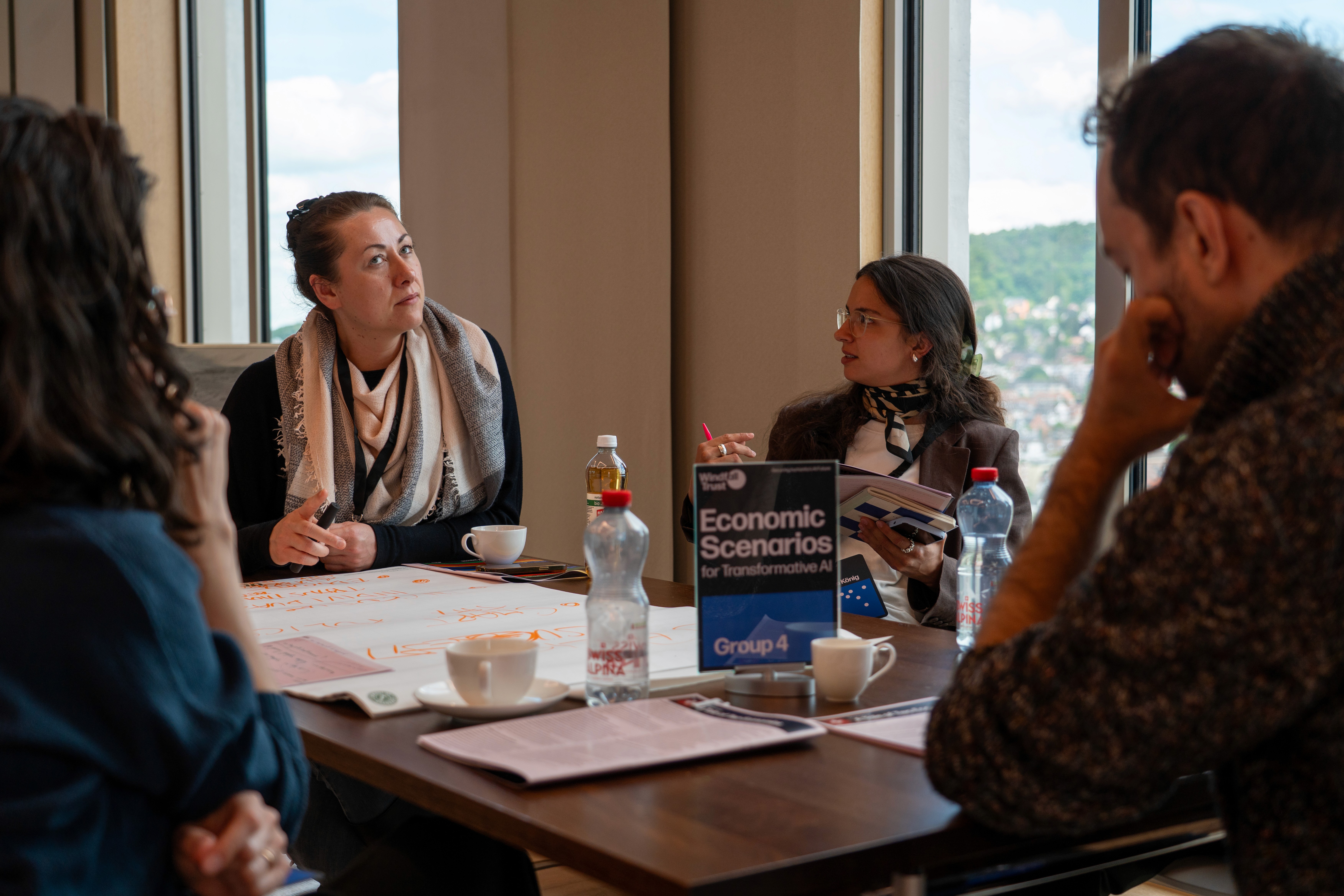
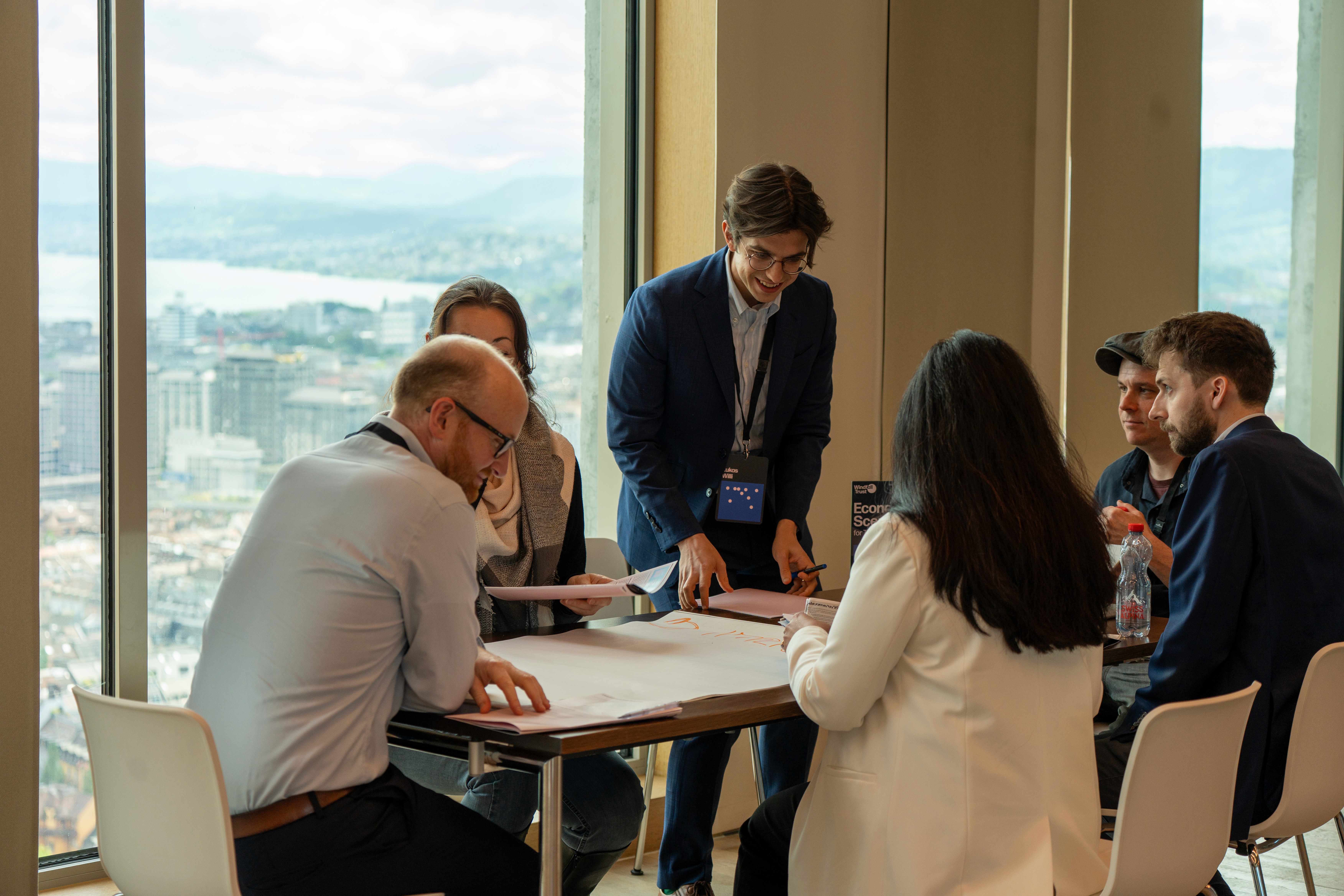
That tension brought a group of economists, technologists, social partners, and policymakers together on 7 May 2026 for a half-day workshop on economic scenarios for transformative AI, co-convened by the Windfall Trust, Elliott Ash of ETH's Law, Economics and Data Science faculty, and the Albert Einstein School of Public Policy. The premise was simple: take AI out of the abstract and make it real for a small, open, service-driven economy.

The Scenario
Participants were placed inside a Switzerland where advanced AI systems, deployed at scale by 2030, have automated a large share of the high-skilled professional work that the country’s competitive advantage rests on: parts of financial services, legal advisory, consulting, and technical specialisation. The shock is concentrated rather than evenly distributed. Some firms thrive; many shrink quickly. Cantons see their tax base shift. Demand for retraining and adjustment grows faster than the institutions designed to deliver it. The federal response is still being worked out.
Each group was given a mandate close to what a real Swiss decision-maker would face: you are advising the federal council. You have a limited window. What do you prioritise, what do you postpone, and what trade-offs are you prepared to make?
We chose this scenario not because it is extreme, but because it is plausible within a five-to-ten year horizon, and because Switzerland’s particular structure—small, open, highly specialised, consensus-driven—creates both real strengths and specific vulnerabilities that are rarely worked through in detail.
What we saw
As soon as the scenario became concrete, the conversation changed. Participants moved quickly from general views about AI to specific questions of action. Which sectors are exposed and how fast? Which cantons absorb the shock first? What is the federal versus cantonal split of responsibility? What is the role of social partners? Who has to be in the room within weeks, not years?
Three observations stood out.
1. The bottleneck is institutional, not intellectual
Survey results before and after the session showed a small but instructive pattern. Confidence that policy frameworks could be part of the answer rose modestly. Confidence that current institutions were adequate to deploy them fell. The implicit reading from the room: there are policy levers—tax design, retraining, fiscal stabilisers, sector-specific support—but the institutions that would have to pull them are configured for gradual change, not for fast, concentrated restructuring of the labour market. Several participants observed that Switzerland’s strength—methodical, consensus-driven decision-making—is precisely what makes a fast scenario harder to plan for here than elsewhere. The challenge is less to invent new policy than to build the institutional capacity to act on policy that already exists.
2. The case for scenarios in a stable economy
A risk we anticipated going in was that Swiss participants could reasonably dismiss the framing as Anglo-Saxon, irrelevant to a country whose institutions and labour market function exceptionally well. That is not what happened. The specificity of the scenario—concrete sectors, plausible timing, real institutional choices—held the room. Several participants noted that this was the first AI conversation they had attended that was grounded in the structure of the Swiss economy rather than in general claims about productivity or risk. Without that level of specificity, preparedness in stable economies tends to remain a topic for working papers rather than for active planning. Stability can mask vulnerability, particularly when the disruption ahead is concentrated rather than gradual.
3. The response cannot be national-only
A theme that emerged from participants themselves was the limits of a purely national response. Switzerland’s exposure runs through international markets, international tax arrangements, and the cross-border movement of skills and capital. Participants pushed the conversation toward the need for international coordination—on company tax in a world of rapidly shifting profit attribution, on standards and norms for AI deployment, and on labour mobility in an economy that imports a substantial share of its specialised workforce. This is consistent with what we hear in other capitals, but it lands with particular force in Switzerland, where openness is not a preference but a structural fact.
What comes next
The Zurich workshop is the first in a planned series with ETH Zurich. The intent is to move, over time, from mapping key factors—the focus of this session—to exploring full scenarios in depth, and ultimately to identifying policy responses that are robust across multiple futures. That work will run into the lead-up to the 2027 international AI Summit in Geneva.
Switzerland’s position in 2027 will matter beyond its borders. The country will host one of the central international conversations about AI governance at a moment when economic preparedness is moving from abstract concern to active question. Workshops like this one are part of making sure that conversation is grounded in serious analysis of how AI will reshape labour markets, fiscal positions, and institutional capacity—not only in major economies, but in the smaller, highly specialised economies that often serve as test cases for whether good policy can keep pace with technological change.
The findings feed directly into the Policy Atlas, Windfall’s evolving map of policy options for governments preparing for AI’s economic consequences, including work on labour market transitions, fiscal tools, and the institutional design questions that this workshop surfaced most sharply.
If you are working on these questions and want to be part of the conversation, contact us at contact@windfalltrust.org.