AI Economic Preparedness In Cities
Madrid, April 2026 — Bloomberg CityLab
Our Scenarios Program convenes economists, AI researchers, policymakers and civil society leaders to explore the implications of transformative AI, and to identify the policy responses each future demands. The workshops are complemented by the Policy Atlas a continuously updated guide to policy options.
We believe that countries should develop Economic Preparedness Plans. Our workshops and the Atlas are designed to provide the foundation for doing so.
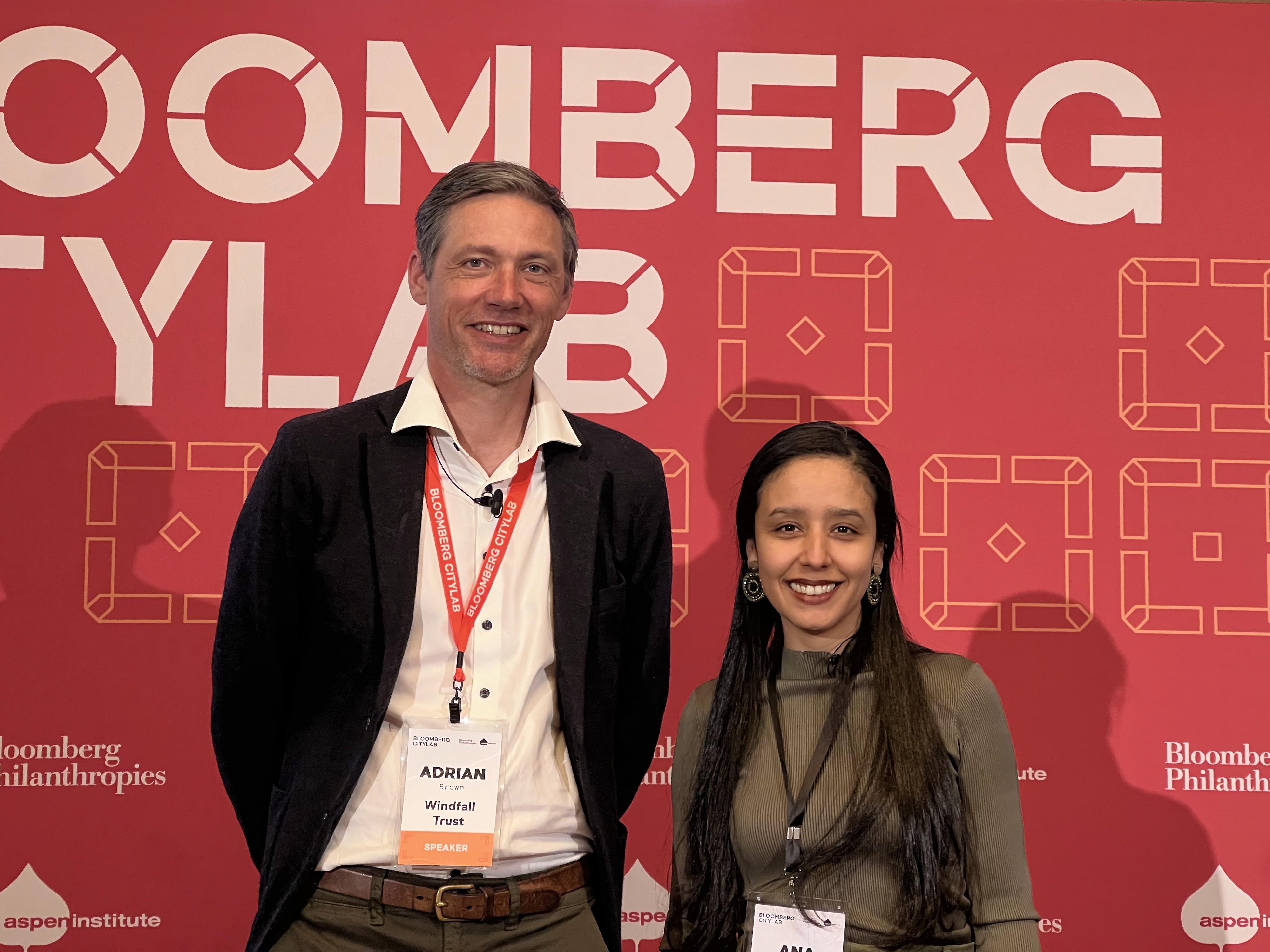
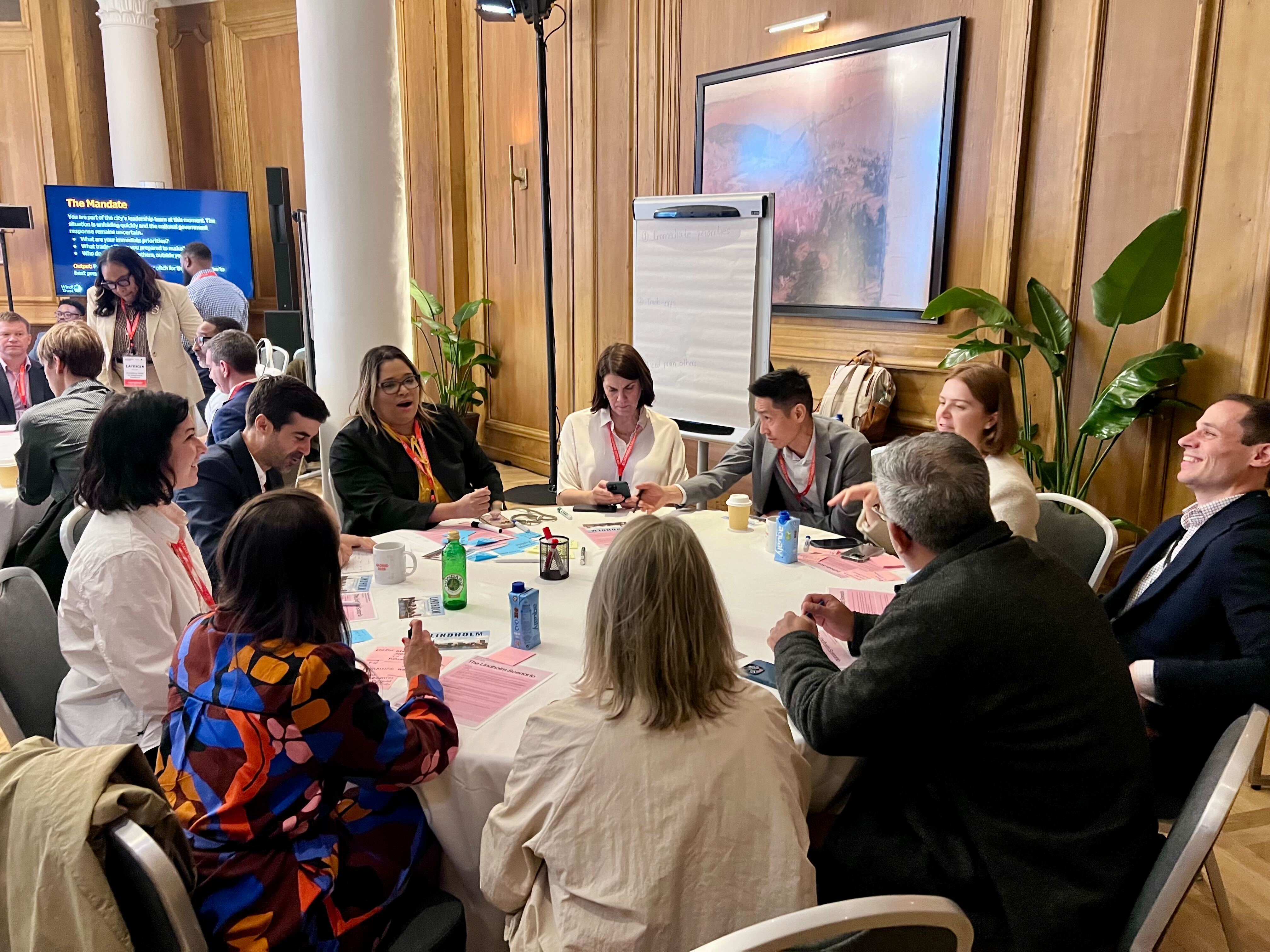
Co-convened with Bloomberg CityLab, this workshop brought together city leaders from across the world to confront a question that national AI strategies rarely ask: what does economic disruption actually look like when it lands in a specific city — and what does a city leadership team do about it?
The Scenario
Participants were placed inside Lindholm — a fictional mid-sized European city of 650,000 people, with a service-heavy economy anchored by a major outsourcing employer and a stable but inflexible fiscal position. By 2030, that employer has automated a large share of its operations. Around 20,000 jobs disappear over 18 months. Unemployment rises sharply among mid-skill white-collar workers. Local consumption drops, the housing market softens, and municipal revenues fall at exactly the moment demand for support increases. The national government response is unclear.
Each group was given a tightly constrained mandate: you are the city leadership team. You have to advise the mayor. What do you do?
We chose this scenario not because it is extreme, but because it is plausible within a five-year horizon — and because most cities have no plan for it.
What we saw
Three observations stood out.
Cities are largely solving this alone. Participants noted that well-developed networks exist for climate adaptation and digital government. Almost nothing comparable exists for AI-driven economic disruption. Several said the most valuable part of the session was not the scenario itself but the realisation that other city leaders were grappling with the same questions from the same starting point of limited preparation and limited national guidance. Preparedness is not only about policy tools. It is also about shared understanding and the capacity to move collectively rather than in isolation.
The national frame is not enough. Most national AI strategies reach for familiar levers — reskilling, education reform, welfare design. These matter, but they are slow-moving and designed for gradual transitions. City leaders do not experience disruption as a national statistic. They experience it as a sequence of local shocks: a major employer automates, a neighbourhood weakens, revenues fall, pressure builds. Several participants noted they had attended multiple AI conferences without once working through a scenario grounded in the structure of a real local economy. Without that specificity, preparedness remains abstract.
Speed is still underappreciated. Even in a room familiar with AI, many groups initially underestimated how quickly pressures compound. Job losses translated into fiscal strain faster than expected. Fiscal strain constrained response options. Demand for support rose sharply at the same time. Trade-offs arrived together, not sequentially — stabilise the labour market, protect municipal finances or maintain social cohesion — with almost no time to sequence them.
What comes next
At the same summit, Bloomberg Philanthropies and Johns Hopkins University launched the Mayors AI Forum — a global coalition of city leaders working to shape how AI is developed and deployed, with founding members including the mayors of Bogota, Boston, Buenos Aires, Kyiv, London, Madrid, Nairobi, San Antonio, San Francisco and Tokyo.
Windfall Trust will run scenario sessions with participating Forum cities, building on the approach tested in Madrid and adapting it to each city's economic structure, fiscal position and institutional landscape. The findings feed directly into the Policy Atlas, Windfall's evolving map of policy options for governments preparing for AI's economic consequences — including work on urban economic resilience, workforce transitions and municipal fiscal tools.
If you are working on these questions and want to be part of the conversation, contact us at contact@windfalltrust.org.